

The Challenge
Over the last decade, technical investigations related to civil litigation have changed drastically. Since the 2001 edition of NFPA 921, The Guide to Fire and Explosion Investigations, loss sites are now considered evidence; this precedence goes well beyond fire litigation Failure to allow other interested parties (such as potential plaintiffs and/or defendants) access to a loss site may jeopardize a case. There are numerous cases throughout the country where summary judgments are being granted because a plaintiff and/or their agents failed to preserve a scene and/or its relevant evidence.
The New Legal Precedent
This new legal precedent has created great challenges to experts and their clients:
- On smaller losses, where a client may not wish to place interested parties on notice of a loss, they have a duty to preserve the evidence not only to support their opinion, but also to allow an adverse party to develop their own opinion independently.
- On larger losses, when interested parties do go to the scene, it is not unusual for adverse investigators to request large amounts of evidence only remotely related to the loss.


For example, in the past, a kitchen countertop fire involving a coffeemaker would only require securing the coffeemaker as evidence. In today’s spoliation climate, it is not uncommon to secure not only the coffeemaker, but also the outlet it was plugged into, the circuit breaker that fed it, the countertop itself, the wall cabinets above it, the toaster plugged in next to the coffeemaker, the paper towel holder, and the list goes on! Litigation is difficult enough without having to deal with evidentiary issues. Would you rather spend your time defending a motion in limine for spoliation or preparing for trial?

Questions To Consider
Here are some questions to consider when working with an evidence preservation company:
- Has the company ever been sued for the loss or destruction of evidence?
- Are they a licensed private detective agency?
- Are their evidence tags compliant with ASTM E1459?
- Do they stock desiccants for moisture-sensitive items?
- When do they use ESD-safe bags for electronic items?
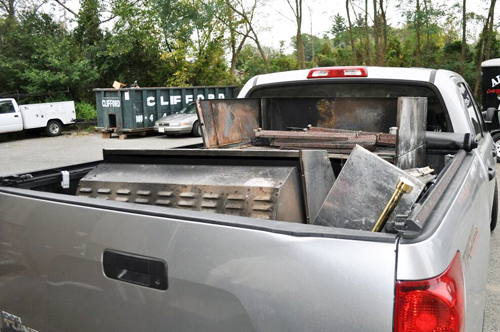
- Do they transport evidence only in covered vehicles?
- Is every evidence disposal overseen by the president of their company?
When you don’t get straight answers from your evidence preservation company, call us!